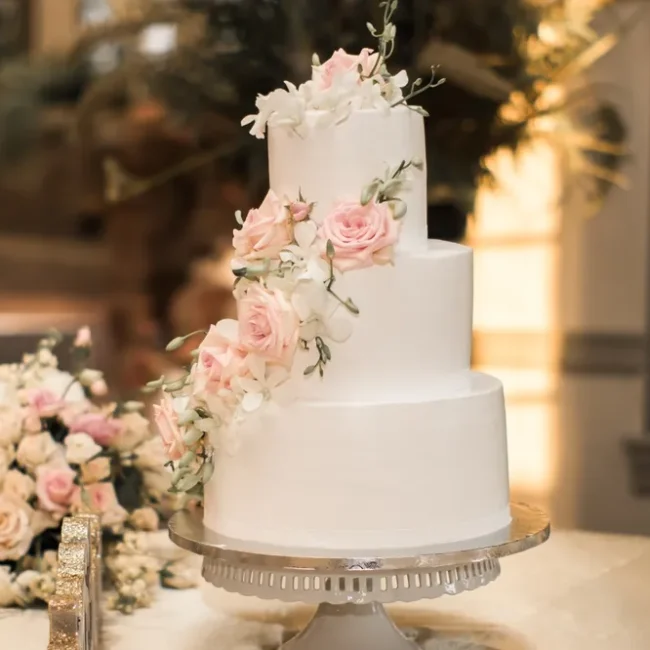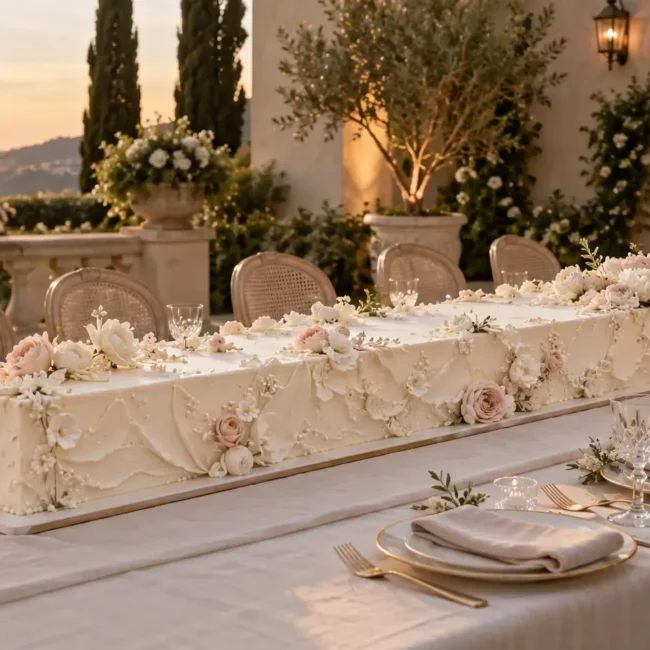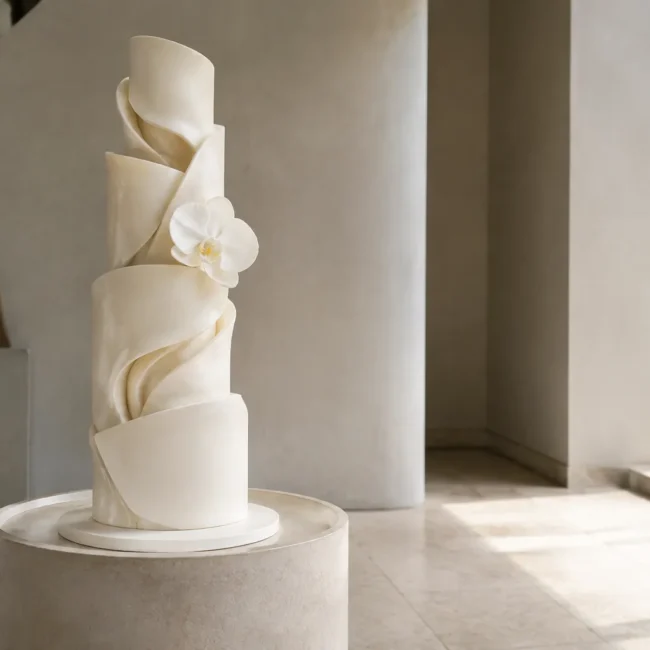

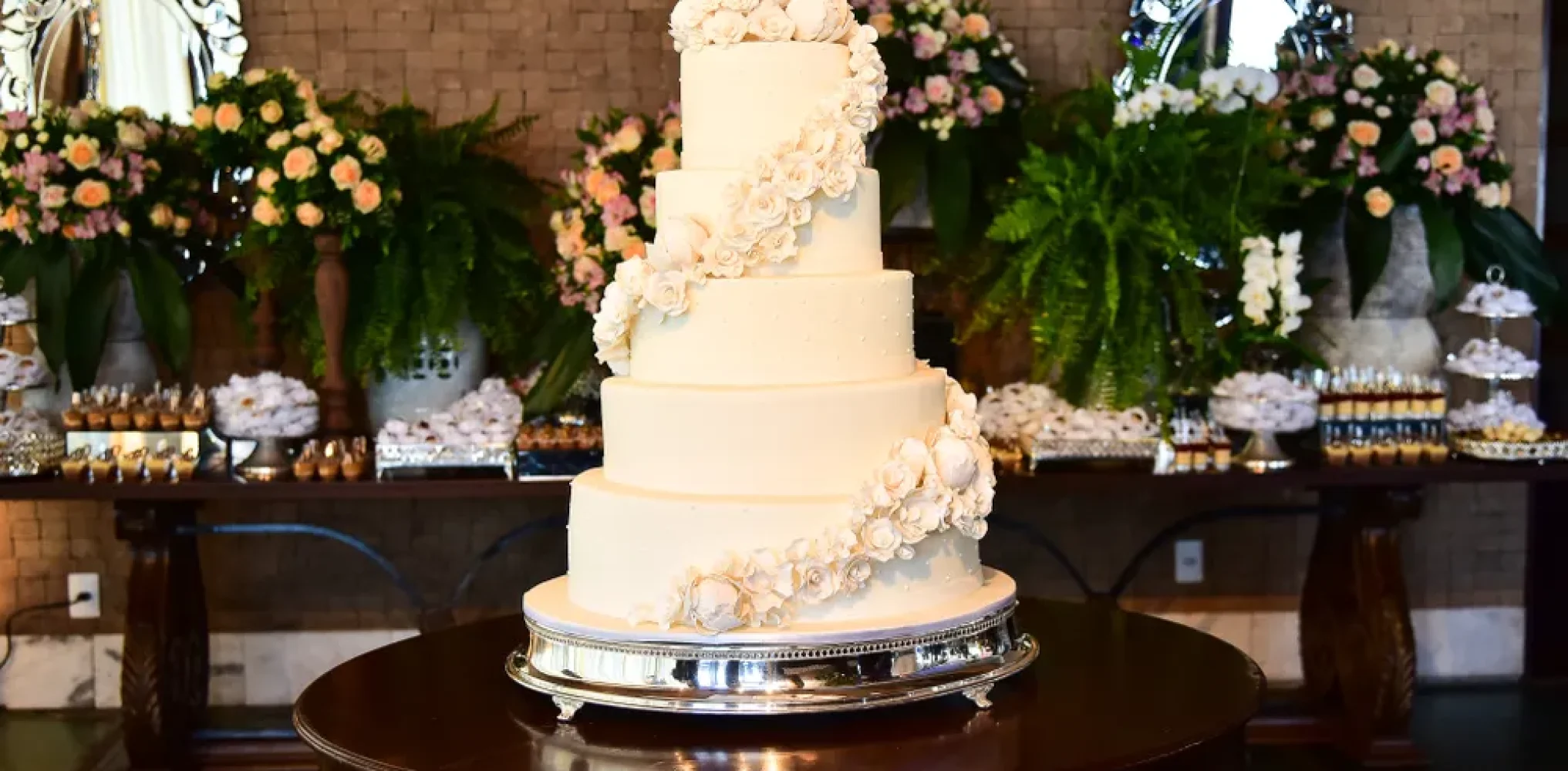
Southern California weddings have a visual language of their own. From oceanfront celebrations and vineyard receptions to elegant ballrooms, private estates, garden venues, and modern luxury resorts, every setting creates a different atmosphere, and the wedding cake should feel intentionally designed for that environment. The best wedding cakes for SoCal venues do more than complement a color palette. They become part of the event’s architecture, styling, photography, and overall guest experience.
For couples planning a high-end wedding in Orange County, San Diego, Los Angeles, or throughout Southern California, choosing the right cake design often begins with the venue itself. A sculptural multi-tier cake may command attention in a grand ballroom, while an airy floral design can feel more natural at a coastal estate. Romantic sugar flowers may echo the landscape of a garden wedding, while refined textures, architectural tiers, and minimalist detailing can complement contemporary hotels and modern event spaces.
At Gown & Glaze, we approach luxury wedding cakes as custom-designed works of edible art. Every element—from silhouette and proportion to floral detailing, texture, color, and presentation—is considered in relation to the couple’s vision and the atmosphere of their celebration. Rather than selecting a cake independently and placing it into a venue, the goal is to create a cohesive design that feels as though it belongs within the wedding from the beginning.
How do you choose the best wedding cake for a Southern California venue?
Choose a cake by considering the venue’s scale, architecture, lighting, season, indoor or outdoor placement, guest count, wedding style, gown details, and floral design. A custom cake designer can translate those elements into a cohesive silhouette, palette, texture, flavor experience, and display plan that belongs naturally within the setting.
The best cakes for venues are not necessarily the tallest, most expensive, or most decorated. They are the cakes whose silhouette, scale, texture, palette, display, and structural requirements respond intelligently to the celebration around them.
At Gown & Glaze, that conversation begins with more than a reference image. The venue, gown, florals, stationery, guest experience, and visual proportions of the reception all contribute to a couture-informed design direction. Gown & Glaze’s published work connects handcrafted cake artistry with bridal-fashion details such as lace, pearls, embroidery, draping, architectural seams, and floral appliqué. The studio currently describes custom design consultations and tastings by appointment while serving San Diego, Orange County, and Los Angeles.
The Cake Should Belong to the Setting
A thoughtfully designed wedding cake should feel visually connected to the room, landscape, fashion, and floral atmosphere rather than appearing as a separate dessert placed wherever space remains.
The venue sets the stage; the cake becomes part of the composition.
Venue-inspired cake design does not require copying a building’s columns, wallpaper, tiles, or landscaping. The more refined approach is to interpret its visual language:
- Form and proportion
- Architectural rhythm
- Surface texture
- Color and material
- Natural or artificial light
- Historical character
- Landscape and surrounding movement
- The emotional tone of the celebration
A carved doorway might inspire shallow embossed relief. A ballroom’s vertical scale might suggest narrow elevated tiers. A coastal horizon could influence an airy composition without adding a single seashell. The result should feel related to the setting without becoming themed décor.
What Makes a Wedding Cake Right for a Venue?
A venue-responsive cake considers how the dessert will be seen, served, photographed, transported, and experienced.
Ceiling Height and Cake Height
High ceilings, large chandeliers, expansive dance floors, and dramatic floral installations can visually reduce the apparent size of a cake. A delicate two-tier design may feel beautifully proportional at an intimate restaurant but disappear in a large ballroom.
Height can be created without producing more servings. Narrow architectural tiers, spacer tiers, elevated pedestals, negative space, and a carefully scaled backdrop can give the cake presence while keeping edible capacity aligned with the guest count.
Room Scale and Tier Proportion
Wide traditional tiers communicate solidity and formality. Tall, narrow tiers appear more editorial and architectural. Offset tiers can feel sculptural, while evenly graduated tiers create classical rhythm.
A cake’s diameter is as important as its height. A tall cake with a very narrow base may look under-scaled on a broad banquet table, while a wide cake can overwhelm a small garden dinner.
Architecture and Surface Detail
The venue’s materials can guide the finish:
- Limestone or plaster may inspire tonal bas-relief.
- Carved wood may suggest fine piping or embossed patterns.
- Glass and steel may support controlled geometry.
- Historic brick may pair with warm ivory and restrained vintage piping.
- Botanical surroundings may suggest hand-painted foliage or asymmetric sugar flowers.
The goal is interpretation rather than imitation.
Lighting and Cake Color
Bright white, ivory, champagne, blush, stone, and pale gray respond differently under daylight, amber chandeliers, colored uplighting, and flash photography.
A cool white cake may appear blue near a window or against deep green landscaping. Warm ivory can become more golden beneath ballroom lighting. Couples should review their cake color beside gown fabric, linens, flowers, and a photograph of the reception lighting whenever possible.
Placement and Photography
The cake table should have a deliberate backdrop, sufficient lighting, a stable surface, and unobstructed photography angles. Avoid placing it beside exit signs, service doors, speakers, crowded bars, or strongly patterned walls unless those elements can be visually controlled.
Ask the photographer to capture the full cake composition before guests enter the reception and before candles, floral installations, or nearby tables are disturbed.
Guest Count and Serving Requirements
Visual scale and serving capacity are related but not identical. A dramatic display may use edible tiers, transparent separators, or clearly disclosed display tiers, supported by supplemental kitchen cake when appropriate.
Gown & Glaze’s five-tier wedding-cake size guide explains why diameter, tier height, portion method, top-tier plans, and display tiers should be evaluated separately rather than assuming that a taller cake automatically produces more servings.
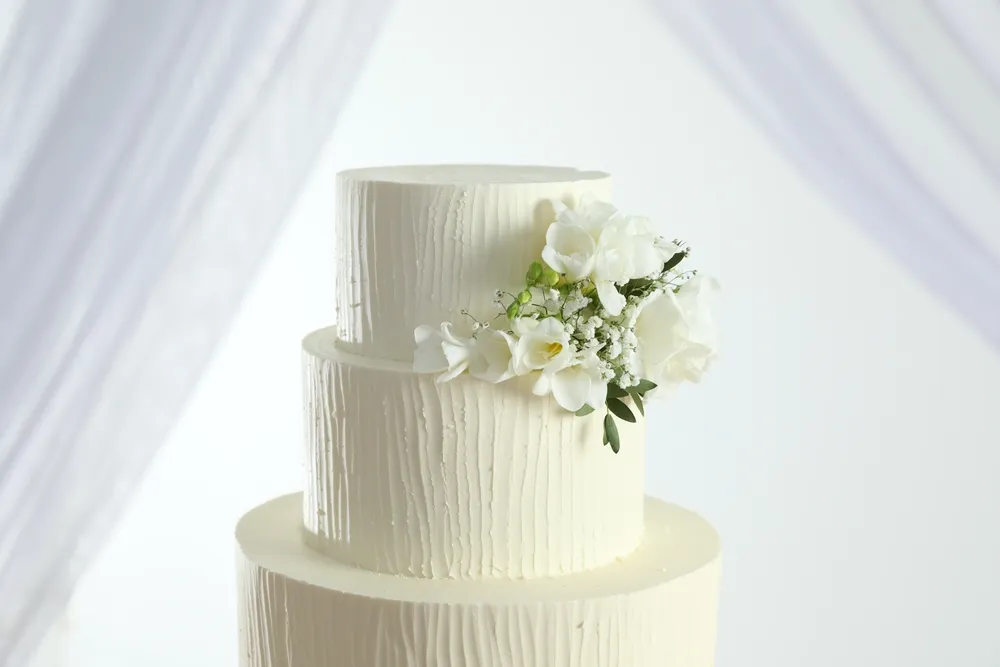
Best Cakes for Venues by Southern California Wedding Style
Coastal Resorts and Oceanfront Venues
A wedding cake for a coastal venue benefits from an airy, disciplined design rather than literal beach imagery.
Consider:
- Soft ivory, oyster, champagne, or tonal pearl palettes
- Controlled buttercream movement
- Translucent sugar sails or wave-like elements
- Sculptural orchids or restrained coastal botanicals
- Fine pearl detailing
- Asymmetrical tier spacing
- Light-reflective accents used sparingly
Seashells, blue gradients, and sand textures are unnecessary unless they have personal significance. The ocean already provides the theme.
Wind, reflective sunlight, humidity, outdoor display duration, floral security, and access to a protected indoor location should be discussed with the venue, planner, and cake designer.
Grand Ballrooms and Black-Tie Hotels
Ballrooms generally require clearer vertical presence.
Suitable directions include:
- Tall structured tiers
- Smooth monochromatic finishes
- Disciplined sugar draping
- Architectural tier spacing
- Pearl-detailed borders
- Controlled metallic accents
- Refined floral cascades
- Elevated pedestals or layered display tables
The cake must hold its place against chandeliers, high ceilings, a large dance floor, formal linens, and substantial floral architecture. Dramatic scale can still feel restrained when the palette and surface treatment remain focused.
Historic Estates and European-Inspired Properties
Historic architecture does not automatically require an ornate cake.
Couples may consider:
- Warm ivory or champagne tones
- Bas-relief textures
- Fine vintage piping
- Hand-painted botanical details
- Lace-inspired surfaces
- Classical tier proportions
- Selective antique-gold detailing
- Romantic sugar flowers
- Subtle references to stone, ironwork, carved doors, or formal gardens
A modern gown can create a productive contrast with a historic venue. In that case, a clean cake silhouette with one architectural motif may feel more considered than an entirely traditional composition.
Garden Estates and Botanical Venues
A garden cake needs enough definition to remain visible among surrounding flowers.
Effective approaches include:
- Organic sugar-flower arrangements
- Botanical illustration
- Tonal foliage
- Fine buttercream movement
- Soft asymmetry
- Airy tier structures
- Florals concentrated at one intentional point
- A clean pedestal that separates the cake from the landscape
Repeating every flower used throughout the wedding can make the cake visually dense. Instead, select one or two floral gestures that communicate the same color story and movement.
Vineyards, Ranches, and Countryside Venues
Modern countryside styling should feel organic without defaulting to burlap, mason jars, naked cake, or generic farmhouse imagery.
Consider:
- Warm neutrals and mineral tones
- Linen-, stone-, ceramic-, or wood-inspired finishes
- Sculptural buttercream
- Subtle fig, olive, herb, grapevine, or seasonal-fruit references
- Handmade botanical details
- Modern rustic silhouettes
- Low, textural floral arrangements
The result should feel connected to the landscape but finished enough to stand alongside formal attire and elevated tablescapes.
Modern Museums, Galleries, and Architectural Spaces
Precision matters more than decoration in a modern setting.
Strong directions include:
- Monochromatic surfaces
- Geometric forms
- Offset or suspended-looking tiers
- Negative space
- Sharp, controlled edges
- Sculptural sugar elements
- Minimal floral placement
- Unusual but balanced proportions
Because fewer decorative elements are present, each seam, edge, and surface becomes more visible. Restraint requires exceptional execution.
Rooftop and City Weddings
Rooftop cakes should read clearly against a changing skyline and mixed natural and artificial light.
Consider:
- Strong silhouettes
- Controlled contrast
- Reflective details
- Modern tier arrangements
- Clean display styling
- Secure decorative elements
- A backdrop that prevents the cake from visually merging into the cityscape
Temperature changes, wind, short setup windows, elevators, loading access, and limited staging space should be reviewed before finalizing the design.
Private Estates and Luxury Residential Weddings
A private-estate cake can respond directly to residential architecture, gardens, pool areas, art collections, interior finishes, family history, bespoke linens, and site-specific floral installations.
These celebrations require particularly careful coordination around:
- Delivery access
- Flooring and surface protection
- Refrigeration
- Poolside humidity and wind
- Uneven garden surfaces
- Display stability
- Catering responsibilities
- Removal of packaging and equipment
- Discreet setup timing
The final plan should be reviewed by the planner, property representative, caterer, florist, and cake designer.
Intimate Restaurants and Micro-Wedding Venues
A small cake can still feel editorial and significant.
Consider:
- Tall, narrow tiers
- Fine piping
- One statement flower
- Hand-painted detail
- Exceptional surface finish
- A sculptural pedestal
- Individual plated desserts supporting the display cake
- Flavor combinations designed for a seated dinner
Instead of adding excessive decoration, invest visual attention in proportion, finish, flavor, and the relationship between the cake and dining table.
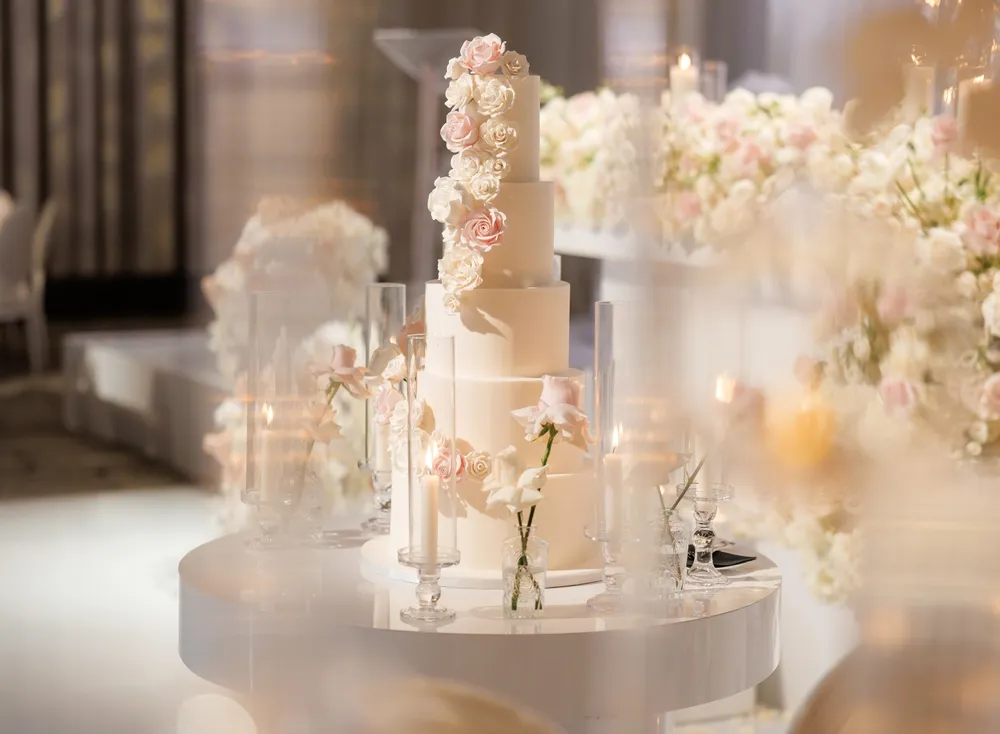
Southern California Venue Examples and Cake Directions
This is where the phrase best cakes for venues becomes practical: the appropriate design changes according to the architecture, scale, landscape, lighting, and logistics of each property.
The following concepts are independent editorial recommendations. They are not official venue endorsements, approved designs, or evidence of vendor relationships. Confirm current vendor, access, setup, floral, refrigeration, and display requirements directly with each venue.
1. Hotel del Coronado — Coronado
Venue character: Hotel del Coronado offers both beachfront settings and historic indoor rooms. Its Crown Room includes a high wood-domed ceiling and distinctive chandeliers, while the property also offers lawns, terraces, beach areas, and large ballrooms.
Recommended cake direction: A tall, ivory architectural cake with disciplined vintage influence.
Surface and detailing: Fine piping, subtle pearl borders, soft sugar draping, or restrained embossed motifs.
Suggested palette: Warm ivory, soft champagne, faded blush, or ivory with deep red used only as a controlled accent.
Floral direction: Garden roses, orchids, or sugar flowers arranged vertically rather than in a heavy cascade.
Display recommendation: A substantial pedestal with a clean linen and lighting that separates the cake from wood-paneled or ocean-facing backgrounds.
Logistical consideration: Beach and lawn displays require wind, sun, temperature, and indoor-backup planning.
Optional gown connection: Translate pearl beading, vintage lace, or a structured satin bodice into the cake surface.
2. Fairmont Grand Del Mar — San Diego
Venue character: Fairmont Grand Del Mar presents manicured gardens, canyon views, terraces, a ballroom, and the Capella space with a timbered ceiling, leaded windows, chandeliers, marble, and stained glass.
Recommended cake direction: A classical tier structure refined with couture surface work.
Surface and detailing: Tonal bas-relief, lace-inspired piping, architectural separators, or hand-painted botanical details.
Suggested palette: Cream, antique ivory, pale stone, muted rose, or restrained gold.
Floral direction: Garden-style sugar flowers with controlled movement.
Display recommendation: An elevated round table or stone-toned pedestal with balanced floral framing.
Logistical consideration: Confirm whether the display will be indoors, on a terrace, or on a lawn and plan for the corresponding setup conditions.
Optional gown connection: Embroidered lace, corset seams, or a cathedral veil can inform texture and vertical scale.
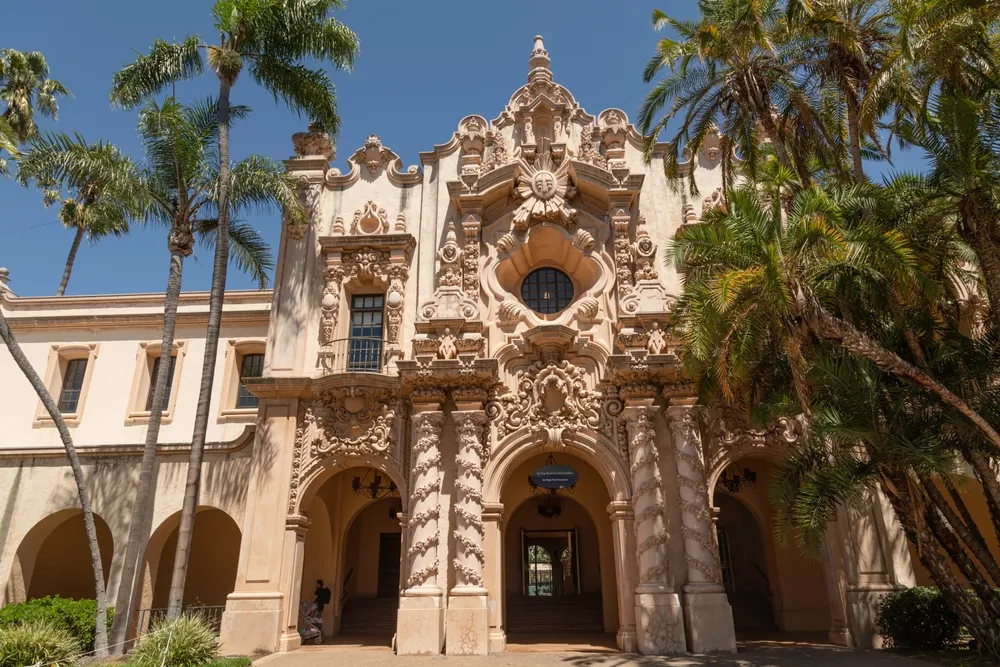
3. The Prado at Balboa Park — San Diego
Venue character: The Prado at Balboa Park offers indoor and outdoor event settings, including gardens, terraces, courtyards, and a Grand Ballroom within Balboa Park’s distinctive historic environment.
Recommended cake direction: Romantic architecture interpreted through warm color and shallow relief.
Surface and detailing: Hand-painted botanical work, tile-inspired geometry used abstractly, lace piping, or sculpted plaster-like texture.
Suggested palette: Warm white, pale terracotta, soft sage, dusty blue, or muted gold.
Floral direction: Bougainvillea-inspired color used sparingly, sugar roses, or airy greenery coordinated with the florist.
Display recommendation: A simple pedestal that allows the surrounding architecture to remain visible.
Logistical consideration: Select a backdrop that does not compete with highly detailed walls, doors, or landscaping.
Optional gown connection: Spanish lace, embroidered appliqué, or flowing veil movement could become piped or sculpted detail.
4. The Resort at Pelican Hill — Newport Coast
Venue character: The Resort at Pelican Hill describes a Mediterranean-inspired setting with Pacific views, landscaped grounds, terraces, olive trees, and lavender.
Recommended cake direction: A tall Mediterranean-modern silhouette with generous negative space.
Surface and detailing: Smooth warm ivory, stone-like texture, thin architectural borders, or sculptural olive-inspired sugar foliage.
Suggested palette: Oyster, limestone, champagne, pale olive, or warm white.
Floral direction: Restrained orchids, olive foliage, or tonal sugar flowers.
Display recommendation: A substantial pedestal with low surrounding florals so the ocean and architecture remain part of the composition.
Logistical consideration: Coastal wind, reflective light, terrace exposure, and setup timing require confirmation.
Optional gown connection: A clean mikado gown could inspire smooth planes and measured tier spacing.
5. Montage Laguna Beach — Laguna Beach
Venue character: Montage Laguna Beach offers oceanfront ceremonies and indoor or outdoor event spaces overlooking the Laguna Beach coastline.
Recommended cake direction: Airy, sculptural, and quietly coastal.
Surface and detailing: Flowing buttercream, translucent sugar details, controlled pearl work, or asymmetrical tiers.
Suggested palette: Soft ivory, oyster, pale gray-blue, pearl, or barely-there blush.
Floral direction: Sculptural orchids or one elevated floral gesture.
Display recommendation: A clean table with reflective or tonal linen and a defined background that protects the cake visually from bright ocean light.
Logistical consideration: Discuss sunlight, wind, humidity, shade, and the transition between outdoor ceremony and indoor reception.
Optional gown connection: Draped silk, pearl embellishment, or a flowing cape can inspire surface movement.
6. Rancho Las Lomas — Silverado
Venue character: Rancho Las Lomas is a private Orange County estate with landscaped gardens and Spanish-style architecture across a 21-acre property. Its FAQ currently notes that couples may hire wedding-cake and specialty-dessert vendors, subject to proof-of-insurance requirements.
Recommended cake direction: Refined botanical design with architectural warmth.
Surface and detailing: Plaster-like buttercream, hand-painted foliage, fine piping, or abstract references to tile and ironwork.
Suggested palette: Warm ivory, sand, terracotta, olive, and muted floral tones.
Floral direction: Loose garden flowers coordinated carefully with the surrounding landscape.
Display recommendation: A stone-, wood-, or ceramic-inspired pedestal with enough contrast to remain visible among greenery.
Logistical consideration: Confirm insurance, access, outdoor exposure, table stability, and vendor arrival procedures.
Optional gown connection: Floral embroidery or lace appliqué could become tonal sugar relief.
7. Franciscan Gardens — San Juan Capistrano
Venue character: Franciscan Gardens combines an open-air courtyard with an indoor space featuring historic brick walls and chandeliers in San Juan Capistrano.
Recommended cake direction: An intimate, tall-narrow cake with vintage-modern detailing.
Surface and detailing: Fine piping, warm-toned buttercream, hand-painted vines, or a restrained embossed pattern.
Suggested palette: Cream, champagne, pale clay, dusty rose, or muted sage.
Floral direction: One concentrated garden arrangement rather than flowers covering every tier.
Display recommendation: A narrow pedestal with candlelight and simple linen that complements rather than duplicates the brick.
Logistical consideration: Review courtyard temperature, ballroom placement, access, and the relationship between cake-table scale and guest circulation.
Optional gown connection: Vintage embroidery, covered buttons, or delicate lace can inspire piping.
8. The Beverly Hills Hotel — Beverly Hills
Venue character: The Beverly Hills Hotel offers garden and ballroom settings. Its Crystal Ballroom is described as an Art Deco space with rose chandeliers, French doors, a built-in stage, dance floor, and garden views.
Recommended cake direction: Black-tie glamour expressed through a clean, tall silhouette.
Surface and detailing: Smooth fondant, tonal pleating, disciplined pearls, sugar draping, or restrained polished accents.
Suggested palette: Warm white, pale blush, champagne, soft pink, or ivory with black detailing.
Floral direction: Sculptural roses or orchids arranged with controlled asymmetry.
Display recommendation: A refined pedestal with focused lighting and a backdrop that separates the cake from chandeliers or patterned interiors.
Logistical consideration: Confirm service access, ballroom setup timing, staging, and floral responsibilities.
Optional gown connection: Satin draping, gloves, pearls, or a structured corset can inform the design.
9. Vibiana — Downtown Los Angeles
Venue character: Vibiana is a large historic Downtown Los Angeles event setting associated with the former Cathedral of St. Vibiana and now used for weddings, dining, performances, and private events.
Recommended cake direction: Monumental but minimal, with strong vertical rhythm.
Surface and detailing: Architectural tier spacing, shallow relief, smooth monochromatic surfaces, or one dramatic sculptural sugar element.
Suggested palette: Bone, warm white, limestone, pale gold, or deep wine accents.
Floral direction: A disciplined vertical installation or minimal flowers.
Display recommendation: An oversized pedestal or elevated platform proportioned to the volume of the room.
Logistical consideration: Confirm loading access, installation timing, table weight, staging area, and the final position relative to architectural sightlines.
Optional gown connection: A cathedral veil, corset structure, or elongated train can inspire height and movement.
10. The Huntington Library, Art Museum, and Botanical Gardens — San Marino
Venue character: The Huntington offers weddings and private events among historic galleries, formal architecture, and botanical gardens. Its venue collection includes garden spaces and architectural settings such as the Library Lawn.
Recommended cake direction: Botanical classicism with a restrained contemporary silhouette.
Surface and detailing: Botanical painting, fine sugar flowers, bas-relief foliage, or warm ivory fondant.
Suggested palette: Ivory, garden green, pale blue, blush, or stone.
Floral direction: Flowers selected from the wedding’s approved floral palette rather than copied from the entire garden.
Display recommendation: A clean pedestal with enough height to remain visible within the landscape.
Logistical consideration: Confirm access times, membership or event requirements, permitted spaces, floral policies, and outdoor contingency plans directly with the venue.
Optional gown connection: Botanical embroidery, soft tulle layers, or heritage-inspired lace can guide the surface treatment.
11. Skirball Cultural Center — Los Angeles
Venue character: Skirball Cultural Center is located in the Santa Monica Mountains and offers courtyards, garden patios, pavilions, and ballroom settings for weddings and social celebrations.
Recommended cake direction: Modern geometry softened by organic floral placement.
Surface and detailing: Offset tiers, matte monochromatic finishes, controlled edges, or sculptural sugar forms.
Suggested palette: Soft white, sandstone, taupe, sage, or deep jewel accents.
Floral direction: Minimal, architectural arrangements or one asymmetrical floral gesture.
Display recommendation: A clean stone-toned pedestal with carefully planned daylight or evening illumination.
Logistical consideration: Confirm whether the cake will be placed in a courtyard, pavilion, or ballroom and plan for the corresponding temperature, access, and lighting.
Optional gown connection: A clean column gown, architectural bodice, or asymmetric draping could inform the cake’s geometry.
Quick Venue and Cake Style Comparison
| Venue Style | Recommended Cake Silhouette | Best Design Details | Display Direction | Main Practical Consideration |
| Coastal resort | Airy, tall, lightly asymmetric | Pearls, translucent sugar, flowing texture | Clean pedestal with protected backdrop | Wind, sunlight, humidity |
| Ballroom | Tall and structured | Smooth tiers, draping, controlled metallics | Elevated table with focused light | Visual scale |
| Historic estate | Classical or narrow architectural tiers | Relief, piping, warm ivory, botanicals | Tonal pedestal | Competing architectural detail |
| Garden venue | Light tiers with defined silhouette | Sugar flowers, illustration, soft texture | Elevated above surrounding greenery | Heat and floral competition |
| Vineyard or ranch | Organic but refined | Mineral textures, herbs, fruit, warm neutrals | Stone-, wood-, or ceramic-inspired stand | Uneven ground and temperature |
| Modern gallery | Geometric and sculptural | Sharp edges, negative space, minimal florals | Simple monochromatic plinth | Precision and visible imperfections |
| Rooftop | Strong, legible silhouette | Contrast, polished accents, modern spacing | Stable table with skyline separation | Wind, access, temperature |
| Private residence | Site-specific composition | Personal architecture, art, or textiles | Custom table or discreet pedestal | Access, refrigeration, flooring |
| Intimate restaurant | Small, tall, highly finished | Fine piping, painting, one statement flower | Refined cake stand | Limited display space |
The Gown & Glaze Venue-to-Cake Design Formula
1. Architecture
Ask:
- Which lines, materials, periods, and details define the venue?
- Are the spaces curved, geometric, heavily ornamented, or minimal?
- Which elements should be interpreted, and which should remain in the background?
- What will appear directly behind the cake?
2. Atmosphere
Ask:
- Is the celebration formal, coastal, romantic, botanical, editorial, historic, or modern?
- Should the cake feel quiet and integrated or become a focal installation?
- What emotional tone should the cake communicate?
3. Attire
Ask:
- Which gown or suit details are visually distinctive?
- Is the fabric smooth, textured, embroidered, draped, or structured?
- Should the cake interpret lace, pearls, pleats, floral appliqué, tailoring, or silhouette?
- Which details matter personally to the couple?
4. Floral Direction
Ask:
- Are the florals garden-inspired, tropical, monochromatic, structured, or sculptural?
- Will the cake use sugar flowers, professionally prepared fresh flowers, painted botanicals, or no flowers?
- Who is responsible for sourcing and placing fresh floral material?
- How large are the surrounding installations?
5. Scale
Ask:
- How large is the reception room?
- What are the ceiling height, guest count, and table dimensions?
- Is the cake surrounded by substantial décor?
- Does the design need height, width, negative space, or an elevated display?
- How many edible servings are actually required?
6. Environment
Ask:
- Will the cake be indoors or outdoors?
- Is it near a window, doorway, pool, heater, or direct sunlight?
- What refrigeration is available?
- How long is the setup window?
- Are elevators, stairs, gravel paths, lawns, or narrow entrances involved?
- Is there an approved indoor relocation option?
Consultation prompt: Save official venue photographs, your gown details, floral proposal, invitation suite, and reception layout in one folder. Bring that visual edit—not hundreds of unrelated cake images—to your custom wedding-cake consultation.
How the Wedding Gown Can Connect the Cake to the Venue
The most sophisticated gown-inspired cakes translate visual language rather than reproduce a dress literally.
- Lace can become piped or embossed texture.
- Satin can inspire a seamless silk-like surface.
- Pearls can become controlled sugar detailing.
- Pleats can become sculpted fondant or buttercream movement.
- Floral appliqué can become handmade sugar flowers.
- Corset construction can influence architectural tier lines.
- Draping can inspire soft movement across one or several tiers.
- A cathedral veil can suggest height, transparency, or airy separators.
- A minimal gown can inspire restrained geometry.
- Vintage embroidery can become hand-painted detail.
Gown & Glaze connects this fashion-led perspective with the work associated with Nikoo Vahdat, Navid Noor, and Bridal & Tuxedo Galleria. The published brand positioning describes bridal fashion and cake artistry as complementary sources of design inspiration.
Couples can explore the studio’s signature cake collections and couture wedding-cake approach before selecting the details they want to discuss during a private appointment.
How to Coordinate the Cake With Florals and Tablescapes
The cake designer, florist, planner, caterer, and venue should establish responsibility for:
- Flower selection
- Food-contact safety
- Stem preparation and barriers
- Floral scale
- Color variation
- Delivery and installation timing
- Cake-table linen
- Candles and heat sources
- Backdrops
- Dessert-table elements
- Lighting
- Photography access
- Removal after the event
Not every flower is edible or appropriate for direct food contact. University of Minnesota Extension advises using only flowers known to be edible and not treated with harmful chemicals. Decorative fresh flowers should therefore be selected and prepared through professional coordination rather than assumed safe because they are commonly used in arrangements.
The floral design should frame the cake without obscuring its silhouette or reducing access for cutting and service.
What Cake Colors Work Best in Different Venues?
Bright White and Cool White
These colors can feel crisp in modern galleries and cool-toned ballrooms but may appear blue in shade or against ocean light.
Warm White and Ivory
Warm whites are versatile for estates, resorts, historic properties, and garden weddings. They coordinate easily with champagne fabrics, warm lighting, natural stone, and candlelight.
Blush and Champagne
These colors work well in romantic ballrooms and gardens but should be compared with florals, linens, and the bride’s gown to avoid unintended undertones.
Stone, Taupe, and Soft Gray
Mineral neutrals suit contemporary spaces, vineyards, ranches, and architecture-led weddings. Texture helps prevent these colors from appearing flat.
Sage and Pale Blue
Muted color can connect a cake to landscape or stationery without becoming literal. Use controlled placement rather than covering every tier.
Jewel Tones and Black Accents
Deep green, burgundy, navy, plum, or black can create definition in evening celebrations. These shades work best as intentional fields or accents rather than disconnected decorative additions.
Metallic Details
Gold, silver, champagne, or copper should respond to tableware, lighting, and architecture. Controlled metallic placement generally photographs more gracefully than an entirely reflective surface.
Choosing Cake Height and Scale
Cake scale should be considered through five separate questions:
- How many servings are required?
- How much visual presence does the room require?
- What size is the display table?
- What floral or architectural elements surround the cake?
- How will it be transported and assembled?
Tall narrow cakes create vertical presence. Wide tiers feel grounded and formal. Spacer tiers and negative space create height without adding edible capacity. A pedestal can add another visual level, while a floral installation can widen the overall composition.
Display tiers and supplemental kitchen cakes are legitimate planning tools when disclosed transparently. They allow the visual scale to respond to the venue while the edible quantity responds to the guest count.
Review Gown & Glaze’s wedding-cake size guide and discuss the actual tier diameters, serving plan, cutting method, and display strategy with the designer and catering team.
Southern California Climate and Wedding-Cake Planning
Southern California celebrations may move between cool interiors, sunny terraces, coastal lawns, inland estates, rooftops, and poolside settings within a single event.
Discuss:
- Coastal humidity
- Inland heat
- Direct afternoon sunlight
- Wind exposure
- Outdoor cocktail-hour duration
- Open-air reception timing
- Air-conditioned ballroom conditions
- Photography schedules
- Available refrigeration
- Loading and elevator restrictions
- Narrow setup windows
- Uneven garden surfaces
- Poolside placement
- Indoor relocation plans
No universal outdoor display duration applies to every wedding cake. Stability and food-safety recommendations depend on the recipe, filling, finish, internal structure, weather, shade, display duration, and venue conditions.
FoodSafety.gov’s general guidance states that perishable foods should not remain unrefrigerated for more than two hours, or more than one hour when exposed to temperatures above 90°F. Whether a particular cake or filling is considered perishable must be determined from its actual ingredients and handling instructions. Follow the cake designer’s product-specific guidance rather than applying a general rule without context.
Professional delivery and setup matter because the cake may need to be transported in sections, assembled on site, repaired after travel, aligned with florals, and positioned according to lighting and service requirements.
Cake Flavors for Different Southern California Wedding Settings
Flavor should complement the guest experience and season without reducing each venue to a cliché.
Illustrative directions include:
- Vanilla bean with raspberry
- Champagne with strawberry
- Lemon with elderflower
- Almond with apricot
- Pistachio with rose
- Hazelnut praline
- Chocolate with espresso
- Fig, honey, and mascarpone
- Citrus and berry combinations
- Rich chocolate flavors for evening receptions
A coastal daytime wedding may suit a bright citrus or berry profile, while a formal ballroom dinner may support hazelnut, espresso, praline, or chocolate. Garden celebrations can carry restrained floral or fruit notes, and autumn estate dinners may pair well with fig, apricot, almond, spice, or caramelized flavors.
These are editorial examples, not a confirmed menu.
Menu verification: Confirm all current flavors, fillings, dietary options, and tasting selections with Gown & Glaze before publication.
Readers may review the current Gown & Glaze flavor menu and the studio’s editorial guide to couture wedding-cake flavor ideas before a tasting.
Common Mistakes When Matching a Cake to a Venue
- Choosing the cake before confirming the venue
- Copying architecture too literally
- Selecting a cake too small for the room
- Combining unrelated inspiration images
- Ignoring the gown and personal fashion direction
- Forgetting the stand, linen, lighting, and cake table
- Using florals that compete with the landscape
- Selecting color without reviewing venue lighting
- Leaving delivery and setup discussions too late
- Placing the cake in direct sun
- Treating flavor as less important than appearance
- Expecting an online inspiration image to be reproduced identically
- Assuming venue policies without confirmation
- Failing to assign responsibility for fresh flowers
- Selecting a design that cannot be transported safely
What to Bring to a Venue-Inspired Cake Consultation
- Venue name and official website
- Official photographs of the ceremony and reception spaces
- Floor plan or reception layout
- Cake-table dimensions
- Estimated guest count
- Wedding date
- Delivery and setup window
- Indoor or outdoor placement
- Gown photographs
- Veil, shoes, jewelry, and accessory details
- Suit or formalwear references
- Floral proposal
- Invitation suite
- Color palette
- Linen and tabletop selections
- Lighting plan
- Planner and florist contact information
- Favorite cake directions
- Styles the couple dislikes
- Flavor preferences
- Dietary considerations
- Photography priorities
- Approximate design investment range
The goal is to refine one coherent design direction—not combine every saved image into a single cake.
Couples who are still defining their aesthetic may begin with simple luxury wedding-cake ideas or unique wedding cakes for San Diego and Orange County.
Gown & Glaze Expert Insight
The Gown & Glaze Design Perspective
The strongest venue-inspired cake does not imitate the room. It interprets the same visual language through proportion, texture, color, and movement. A carved architectural detail might become an embossed surface; a satin gown might inspire a seamless ivory finish; a garden landscape might influence asymmetrical sugar florals. The goal is cohesion, not duplication.
From Venue Inspiration to Couture Cake Design
An ideal luxury cake-development process may include:
- Visual discovery
- Venue and architecture review
- Gown and fashion analysis
- Floral and palette coordination
- Flavor consultation and tasting
- Scale and serving planning
- Concept or sketch development
- Structural and logistical planning
- Venue coordination
- Professional delivery and setup
- Final display review
Operational details and included services should be confirmed for each proposal. Not every stage should be presented as included in every package without written verification.
Why a Custom Cake Matters in a Luxury Venue
A highly designed venue does not require an excessively decorated cake.
Custom design matters because the cake can respond to:
- Room scale
- Architecture
- Bridal fashion
- Floral movement
- Guest experience
- Flavor expectations
- Photography
- Lighting
- Tabletop design
- Event storytelling
- Delivery and display conditions
Luxury is communicated through intention, craftsmanship, proportion, finish, flavor, and reliable execution—not decoration alone.
Frequently Asked Questions
1. How do I choose the best wedding cake for my venue?
Begin with the venue’s scale, architecture, lighting, reception layout, indoor or outdoor conditions, and visual backdrop. Then connect those details to the gown, florals, guest count, and desired flavor experience. A custom designer can determine whether the cake needs height, width, texture, negative space, a pedestal, or a more protected display location.
2. What are the best cakes for venues in Southern California?
The strongest designs respond to the specific setting. Coastal resorts often suit airy, restrained cakes; ballrooms support taller architectural tiers; estates complement warm textures and classical proportion; gardens benefit from defined silhouettes and controlled florals; and modern venues suit geometric, highly precise designs. Climate, access, refrigeration, and display duration also influence the final recommendation.
3. Should my wedding cake match my venue?
It should coordinate with the venue rather than copy it. Interpret the setting’s proportion, texture, color, light, or atmosphere through cake design. A historic property might inspire warm ivory relief, while a coastal resort might suggest airy spacing and pearl details. Literal replicas of columns, tiles, or landscaping are rarely necessary.
4. Should the cake match the wedding dress or the venue?
It can connect both. The venue may guide the cake’s scale and architectural presence, while the gown can inspire surface detail, movement, and finishing. Lace, satin, pearls, pleats, embroidery, and floral appliqué can be translated selectively so the final cake feels connected to the entire celebration.
5. What cake style works best for a coastal wedding?
An airy, structurally secure cake with soft ivory, oyster, champagne, pearl, or pale mineral tones often complements coastal light. Consider restrained sugar movement, sculptural orchids, asymmetric spacing, or fine pearl details. Avoid assuming that every coastal cake needs seashells or blue decoration, and coordinate wind, sun, humidity, and indoor-backup planning.
6. What wedding cake works best in a grand ballroom?
A ballroom generally supports a taller silhouette, structured tiers, smooth finishes, architectural spacing, or disciplined floral cascades. The cake should have enough presence to remain visible beside chandeliers, high ceilings, formal tables, and a large dance floor. A pedestal or transparent separator can add scale without requiring excessive decoration.
7. How large should a cake be for a luxury venue?
Size should reflect both serving needs and visual proportion. Guest count determines edible capacity, while ceiling height, room width, table size, and surrounding installations determine visual presence. A combination of edible tiers, disclosed display tiers, kitchen cake, spacers, and an elevated stand may balance these requirements.
8. Can a small wedding cake work in a large reception room?
Yes. A smaller edible cake can gain presence through tall narrow tiers, an elevated pedestal, negative space, a defined backdrop, focused lighting, or a surrounding floral installation. Supplemental kitchen cake or plated desserts may provide additional servings while keeping the display design refined and proportional.
9. What wedding cake is best for an outdoor ceremony or reception?
Choose a design only after reviewing the actual recipe, filling, finish, shade, weather, setup time, and display duration with the cake designer. Secure decorative elements, stable internal support, a level table, professional delivery, and an indoor relocation option are generally more important than selecting one universal outdoor cake style.
10. How can I protect a wedding cake from Southern California heat?
Keep the cake out of direct sunlight, minimize unnecessary outdoor display time, confirm refrigeration, and follow the designer’s handling instructions. The appropriate plan depends on the filling, finish, structure, weather, and venue. An air-conditioned holding location and a documented indoor relocation plan can reduce uncertainty.
11. Should the florist or cake designer add flowers to the cake?
Assign responsibility before the wedding. The florist may supply approved flowers, while the cake designer may prepare and place them using food-conscious methods. Only flowers known to be suitable should be considered, and not every decorative flower is edible or appropriate for direct food contact. The planner should document the agreed process.
12. How far in advance should I reserve a custom wedding cake?
Begin after securing the venue and establishing the approximate guest count and design direction. Highly customized cakes may require consultation, tasting, design development, structural planning, and venue coordination. Availability varies by date and complexity, so confirm the current booking calendar directly with Gown & Glaze rather than relying on a universal timeline.
13. Can different wedding-cake tiers have different flavors?
They often can, depending on the cake’s structure and the designer’s current menu. Different tiers may offer separate flavor experiences, but the cutting team needs a clear serving plan so guests understand the selections. Confirm available combinations, allergens, dietary options, and tier identification during the tasting.
14. Does Gown & Glaze deliver and set up cakes at Southern California venues?
Gown & Glaze’s published website describes service across San Diego, Orange County, and Los Angeles and emphasizes custom wedding cakes, consultations, and professional event presentation. Delivery and setup availability, fees, timing, venue access, and installation requirements should be confirmed for the specific date and property.
15. Where can I order a venue-inspired wedding cake in San Diego or Orange County?
Gown & Glaze creates couture-informed custom wedding cakes for Southern California celebrations, including San Diego and Orange County. Couples can begin by reviewing the studio’s custom cakes, signature collections, flavor resources, and design-team information before requesting a private consultation or tasting.
Create a Cake That Belongs to Your Celebration
The best cakes for venues create a visual and culinary relationship between the architecture, gown, florals, lighting, climate, guest experience, and reception design. “Best” means most cohesive and appropriate—not simply largest, tallest, or most expensive.
Gown & Glaze brings together pastry artistry and a couture bridal-design perspective to create custom wedding cakes with sculpted textures, sugar flowers, lace-inspired piping, architectural tiers, and personalized visual details. The studio’s fashion-meets-flavor direction can help couples and planners develop cakes that feel at home in coastal San Diego, an Orange County estate, a Los Angeles ballroom, or another distinctive Southern California setting.
Bring your venue, gown, floral vision, and celebration details to a private Gown & Glaze consultation. Together, these references can become a couture-inspired wedding cake designed to feel completely at home in your Southern California setting.
Explore Gown & Glaze custom wedding cakes and begin your design conversation.