
A Couture Guide by Gown & Glaze
A wedding cake is no longer just a dessert,it is a visual statement, a storytelling piece, and an extension of the bride’s identity. In luxury weddings, especially, couples are moving beyond traditional tiered cakes and embracing highly personalized designs that reflect their style, story, and aesthetics. One of the most refined expressions of this trend is the wedding dress cake: a custom-designed cake inspired directly by the bride’s gown.
At Gown & Glaze, we approach wedding dress cakes with the same philosophy used in couture fashion—intentional design, precision craftsmanship, and emotional storytelling. When a cake truly mirrors a bridal gown, it becomes more than edible art; it becomes a symbol of the bride’s vision translated into sugar, texture, and form.
This guide explores how to thoughtfully design a wedding dress cake that aligns seamlessly with your bridal gown, from silhouette and fabric interpretation to color, texture, and presentation.
The Philosophy Behind a Wedding Dress Cake
A wedding dress cake is not about novelty or imitation. It is about interpretation. Just as couture designers interpret inspiration into fabric and form, cake designers translate bridal fashion into edible design. The result should feel elegant, cohesive, and intentional—not literal or gimmicky.
The most successful wedding dress cakes evoke the essence of the gown rather than copying it stitch by stitch. They communicate the same mood, level of luxury, and sense of movement as the dress itself. When done correctly, guests instinctively recognize the connection between the bride and the cake without explanation.
Using the Bridal Gown as the Design Blueprint
Every successful wedding dress cake begins with the gown. Before any sketches or flavor decisions are made, the gown must be carefully studied as a design reference.
Key elements to analyze include:
- Overall silhouette and structure
- Fabric type and texture
- Level of embellishment
- Color tone and undertones
- Movement and flow
- Emotional tone (romantic, modern, dramatic, minimalist)
High-quality images of the gown—front, back, and close-up details—are essential. These images guide proportion, detailing, and surface design throughout the cake creation process.
The gown is not simply inspiration; it is the foundation.
Translating Dress Silhouettes Into Cake Structure
Silhouette is one of the most powerful visual cues in both fashion and cake design. The shape of the gown should influence the physical structure of the cake.
Ball gown dresses translate beautifully into multi-tiered cakes with a wide base and gradual tapering, creating a sense of drama and grandeur. A-line gowns inspire elegant tiered cakes with subtle flaring that feels balanced and timeless. Mermaid or fit-and-flare gowns lend themselves to sculpted cakes that emphasize curves and precision, often with smooth finishes and refined detailing. Sheath or column dresses are best represented through minimalist cakes with clean lines and restrained proportions.
Matching the silhouette ensures immediate visual harmony. Even before decorative details are noticed, the shape alone communicates the connection between gown and cake.
Interpreting Fabric Through Edible Techniques
Fabric is where cake artistry becomes truly nuanced. While cake cannot replicate fabric exactly, it can suggest texture, softness, and movement through specialized techniques.
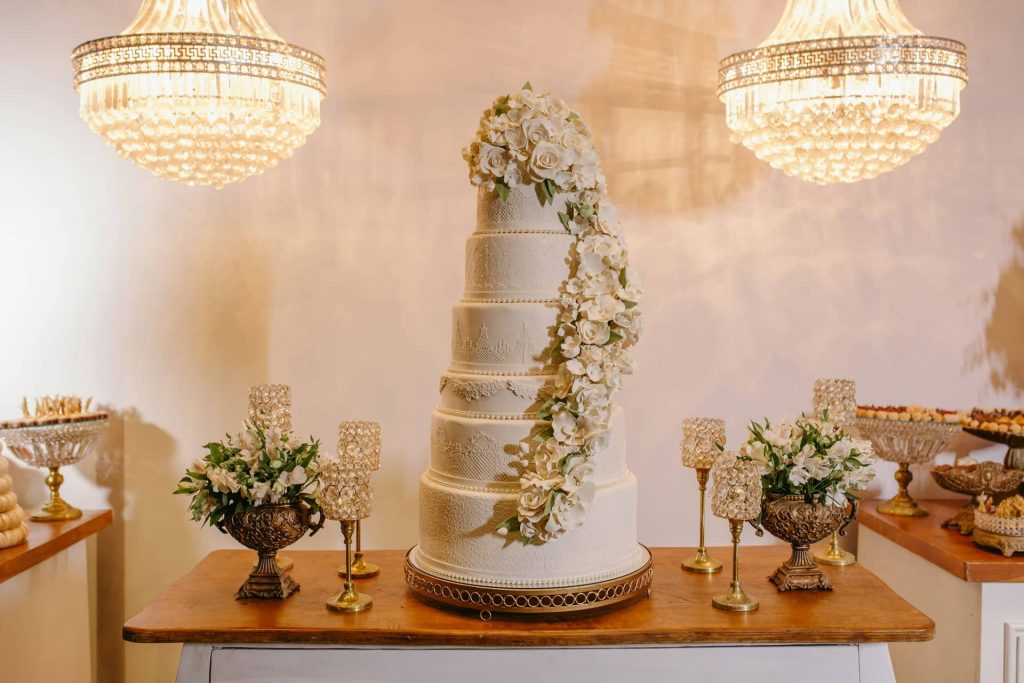
Lace gowns are often interpreted using hand-piped royal icing, edible lace overlays, or delicate sugar appliqués. These methods allow for intricate patterns that feel light and refined rather than heavy or overworked.
Smooth fabrics like silk, satin, or crepe inspire flawless fondant finishes or ultra-smooth buttercream. These cakes rely on precision and restraint—every surface must be immaculate, with minimal distraction.
For gowns made of tulle or organza, designers often use sugar ruffles, wafer paper layers, or softly textured buttercream to evoke volume and motion. These techniques capture the feeling of lightness and flow rather than literal fabric replication.
The goal is emotional accuracy, not realism.
Recreating Embellishments With Restraint
Many bridal gowns feature beading, embroidery, pearls, or crystal details that define their luxury. Translating these elements into a cake requires a careful balance between detail and elegance.
Edible pearls, metallic accents, hand-piped embroidery, and subtle shimmer can echo the gown’s embellishments without overwhelming the cake. The most refined designs use these elements strategically—highlighting key areas rather than covering every surface.
Restraint is critical. A wedding dress cake should feel couture, not cluttered. Each decorative choice should serve a purpose and reinforce the overall aesthetic.
Color Matching Beyond Traditional White
While white remains timeless, modern bridal gowns often feature nuanced tones such as ivory, champagne, blush, or soft nude. A wedding dress cake should reflect these subtleties rather than defaulting to stark white.
Color matching involves understanding undertones and how lighting will affect the final presentation. Warm ivory tones may pair beautifully with soft gold accents. Champagne gowns often inspire muted metallic finishes or gentle gradients. Blush gowns may be echoed with barely-there pink undertones rather than overt color.
Even a monochromatic cake can achieve depth through variations in finish—matte versus satin, smooth versus textured—creating a layered visual experience that mirrors the gown.
Incorporating Bodice and Neckline Elements
The bodice is often the most distinctive part of a bridal gown, and incorporating its design into the cake adds a deeply personal touch.
Strapless gowns may inspire clean, uninterrupted top tiers. Illusion necklines can be interpreted with delicate piping or translucent sugar elements. Corset details, boning, or button backs may be subtly echoed through vertical paneling, lace placement, or structured patterns on the cake.
These elements don’t need to be obvious to every guest. Often, they are intimate details meant for the bride—small design choices that make the cake feel uniquely hers.
Capturing Movement and Flow
Some gowns are defined not by structure but by movement—the way fabric flows, ripples, or cascades as the bride walks. Translating this sense of motion into a cake requires artistic interpretation.
Designers may use cascading ruffles, asymmetrical draping, angled tiers, or textured finishes to suggest movement. These techniques create visual energy and prevent the cake from feeling static.
A cake that captures movement feels alive and expressive, echoing the emotion of the wedding day itself.
Aligning the Cake With the Overall Wedding Aesthetic
While the gown is the primary inspiration, the cake must also integrate seamlessly into the broader wedding design. A modern, architectural wedding calls for clean lines and minimal ornamentation. A romantic garden wedding allows for softness and organic detailing. A luxury ballroom celebration supports scale, drama, and refined opulence.
The cake should feel like it belongs naturally within the space. When gown, cake, décor, and venue align, the result is cohesive rather than competing.
Flavor as Part of the Design Experience
A wedding dress cake should delight the palate as much as the eye. Flavor selection plays a subtle but important role in reinforcing the cake’s identity.
Light, ethereal gowns pair beautifully with delicate flavors such as vanilla bean, almond, citrus, or floral notes. Dramatic or richly embellished gowns often suit deeper flavors like chocolate, espresso, pistachio, or caramel. Seasonal ingredients can further enhance authenticity and balance.
Flavor should never be an afterthought—it completes the sensory experience.
Presentation and Display
The final presentation of a wedding dress cake is as important as its design. Cake stands, table linens, lighting, and placement all contribute to how the cake is perceived.
Elevated stands can enhance silhouette, while minimal backdrops allow intricate details to shine. Proper lighting ensures textures and finishes are visible and flattering. Placement within the venue should allow guests to view the cake from multiple angles, reinforcing its sculptural quality.
Presentation turns a beautiful cake into a true centerpiece.
Collaboration Is Key
Designing a wedding dress cake is a collaborative process. It requires open communication between the bride, cake designer, and often the wedding planner or stylist. Sharing inspiration, discussing priorities, and trusting the designer’s expertise are essential steps.
At Gown & Glaze, we treat each wedding dress cake as a bespoke creation—designed with the same care and intentionality as couture fashion. Our process is rooted in listening, interpreting, and crafting a cake that feels emotionally aligned with the bride’s vision.
Frequently Asked Questions
1. How can a wedding dress cake accurately match my bridal gown?
A wedding dress cake can be designed to closely match your gown by studying key details such as the silhouette, fabric texture, lace patterns, beadwork, and color tone. Cake designers often use reference photos, fabric swatches, or designer sketches to recreate elements like corset bodices, pleated skirts, or illusion lace using fondant, sugar lace, and hand-piped detailing.
2. What gown details translate best into a wedding dress cake design?
Details like lace appliqués, embroidery, draping, pleats, and beading translate beautifully into cake form. Structured silhouettes such as ball gowns, mermaid styles, and A-line dresses are especially popular because they allow for dramatic sculpting and layered textures that mirror couture bridal gowns.
3. Should the cake be an exact replica of the dress or a stylized interpretation?
This depends on your overall wedding aesthetic. Some couples prefer an exact replica for a bold statement piece, while others choose a refined interpretation that captures the essence of the gown without copying every detail. A stylized approach often blends better with the wedding décor while still honoring the dress design.
4. When should I book my wedding dress cake designer?
It’s best to book your cake designer at least 3 to 6 months before the wedding, especially if you want a custom, gown-inspired design. This allows enough time for consultations, design sketches, material sourcing, and coordination with your dress fittings or final gown selection.
5. Can a wedding dress cake match non-traditional bridal gowns?
Absolutely. Wedding dress cakes can be inspired by modern, minimalist, vintage, boho, or even colored bridal gowns. Whether your dress features clean satin lines, floral embroidery, dramatic sleeves, or a soft blush hue, a skilled designer can translate those elements into a cohesive and elegant cake design.
Final Thoughts
A wedding dress cake is a powerful way to extend your bridal identity beyond the gown itself. When designed thoughtfully, it becomes an edible reflection of your style, your story, and your sense of beauty.
By focusing on silhouette, texture, color, movement, and balance—and by approaching the process with a couture mindset—you can create a cake that feels as personal and unforgettable as the dress you walk down the aisle in.
At its best, a wedding dress cake is not just seen. It is felt.